




The skies above Iran are becoming the theater of a new form of aerial confrontation, where stealth technology, electronic warfare, and strategic information intertwine in an increasingly complex scenario. Amid confirmed news and others still shrouded in uncertainty, one fact emerges clearly: 21st-century aerial combat is already an operational reality.
The First Air-to-Air Kill of the F-35: A Historic Event
For the first time in its operational history, the fifth-generation fighter has entered a real air-to-air duel.
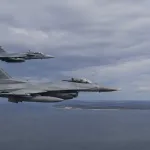
According to Israeli sources, an F-35I “Adir” shot down an Iranian Yak-130 aircraft over the skies of Tehran. An event that marks a watershed:
- first air-to-air kill for the F-35
- first piloted aircraft clash for Israel in decades
- concrete demonstration of the F-35 platform's operational capabilities
It was not a classic close-range dogfight, but most likely a beyond visual range (BVR) engagement, where the pilot sees without being seen, strikes without being tracked.
In other words: the enemy is shot down before even knowing they are in the crosshairs.
What BVR Really Is
BVR, Beyond Visual Range, is today the heart of aerial warfare.
The pilot does not see the enemy. They do not search with their eyes. They “construct” it through a network of sensors.
The target is identified at a distance, even beyond 100 km, thanks to AESA radars, passive sensors, and data shared by other assets: AWACS, satellites, other networked fighters. The tactical picture is no longer individual but distributed.
Once the target is acquired, the aircraft can track it while remaining invisible. This is where the true advantage of the fifth generation comes into play: striking without being detected.
The missile, typically an AIM-120 AMRAAM, is launched from a distance. From that moment, it autonomously guides itself towards the target, correcting its trajectory until impact.
Those being attacked often have no immediate awareness. Reaction time is reduced to a few seconds, sometimes to nothing. In modern combat, the winner is not the one who turns better.
The winner is the one who sees first.

Yak-130: Trainer or Vulnerable Target?
The Yak-130, while being a modern aircraft, was designed as an advanced training jet, with limited capabilities in real combat against fifth-generation platforms.
This raises a key point: it was not an “equal” duel, but a confrontation between completely different technological generations.
Yet, the very fact that Iranian aircraft were operating in that airspace indicates a very high level of tension and operational activity.

Tehran and Cognitive Warfare: The “Hit” F-35
Almost in parallel, an opposite narrative emerges. According to Iranian sources, a U.S. F-35 was hit by Tehran's defense systems.
There are no independent confirmations. No concrete evidence. No wreckage. No images.
Yet the news circulates. It spreads. It is picked up.
This is the real parallel battlefield: cognitive warfare.
Tehran does not need to prove it shot down an F-35. It needs the doubt to exist.
Because the F-35 is not just an aircraft. It is a symbol of Western technological superiority, invisibility, informational dominance. Questioning its invulnerability means striking perception, not just reality.
In this sense, the Iranian statement is perfectly consistent with a modern strategy:
- create uncertainty
- erode trust
- influence public opinion and analysts
It is not necessary to actually shoot down an F-35. It is enough for someone to start wondering if it is possible.
The True Face of Modern Aerial Warfare
What is happening in the Iranian skies clearly shows an irreversible transformation.
Aerial combat is no longer a matter of individual skill, but of systems: sensor networks, data fusion, electronic warfare, and the ability to remain invisible. And above all this, an even subtler level: perception management.
Because today, winning a confrontation does not just mean shooting down an aircraft. It means controlling the narrative of what happened.
The downing of the Yak-130 represents a concrete operational fact. The news of an F-35 being hit, at the current state, falls instead within the realm of narrative.
Both elements, however, are placed within the same strategic context.
A context where the confrontation develops simultaneously in the airspace, technological systems, and cognitive dimension.
In this scenario, superiority is not measured exclusively in tactical results, but also in the ability to shape perception.



Comments
No comments yet. Be the first!