


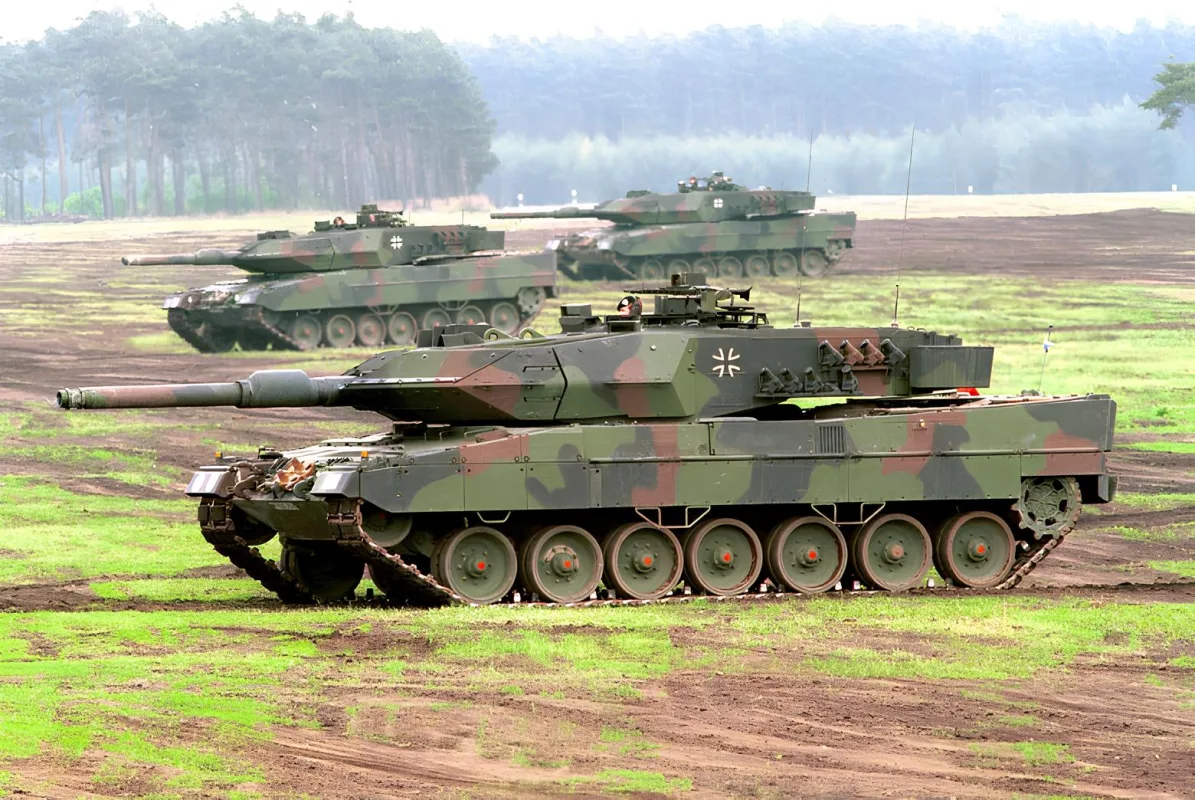

German Chancellor Friedrich Merz has announced an ambitious plan to transform the Bundeswehr, the German army, into the "strongest conventional force in Europe". The announcement, made during his first speech in parliament after the election, marks an epochal shift for Germany, which for decades has maintained a very restrained military spending policy.
A new era for German defense
Merz emphasized that an increase in military spending is a necessity recognized by NATO and European Union allies. This new direction also responds to pressures from countries like the United States, particularly under the administration of Donald Trump, who repeatedly criticized European allies for not contributing sufficiently to the defense budget.
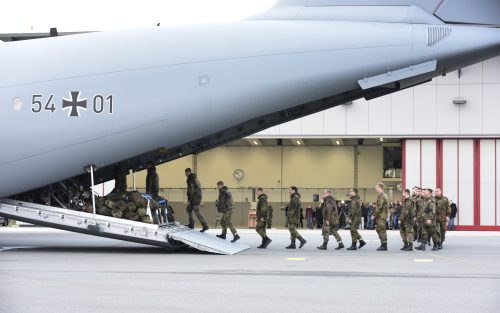
Germany plans to allocate enormous funds, which could reach 1,000 billion euros distributed over several years. The goal is to modernize and strengthen the army, addressing historical equipment and recruitment issues. The projected figures for the coming years are impressive: German military spending could exceed 160 billion euros by 2029, positioning Germany as the largest European military power in terms of budget and the third worldwide, surpassing powers like Russia and the United Kingdom.
Defense as an economic engine
Besides being a security issue, German rearmament is also seen as a lever to revive the national economy. The defense industry is already witnessing a reorganization and conversion of factories to meet the growing demand for military vehicles, missiles, and ammunition. Large companies like Rheinmetall and Thyssen-Krupp are ready to benefit from this massive investment plan.
Moreover, other industrial entities are also moving towards this sector. An example is Porsche, which, along with other companies, has created a 500 million euro fund for investments in the military sector, from cybersecurity to satellite surveillance systems. This demonstrates how rearmament is now seen not as a taboo, but as an opportunity for growth and innovation.

Public opinion consensus
A crucial aspect of this change is the strong support from the German public. Recent surveys show that a clear majority of Germans, 76%, are in favor of a significant increase in defense funds, even at the cost of greater debt. This reversal of trend is partly due to the perception of greater international instability and growing distrust in the security guarantee from the United States.
The consensus also extends to the idea of a joint European armed force, favored by 84% of respondents. However, there remains some caution regarding the deployment of troops in conflict zones, such as Ukraine. Germany, while being one of Kyiv's major supporters, has reiterated its non-belligerence, focusing on providing military aid and strengthening its presence on NATO territory, as in the case of deploying a brigade in Lithuania.
German rearmament represents a turning point, not only for Germany but for the entire balance of power in Europe and the world. The question is: will this renewed military strength serve to ensure peace and stability or redefine international hierarchies in an unpredictable way?






Comments
No comments yet. Be the first!