

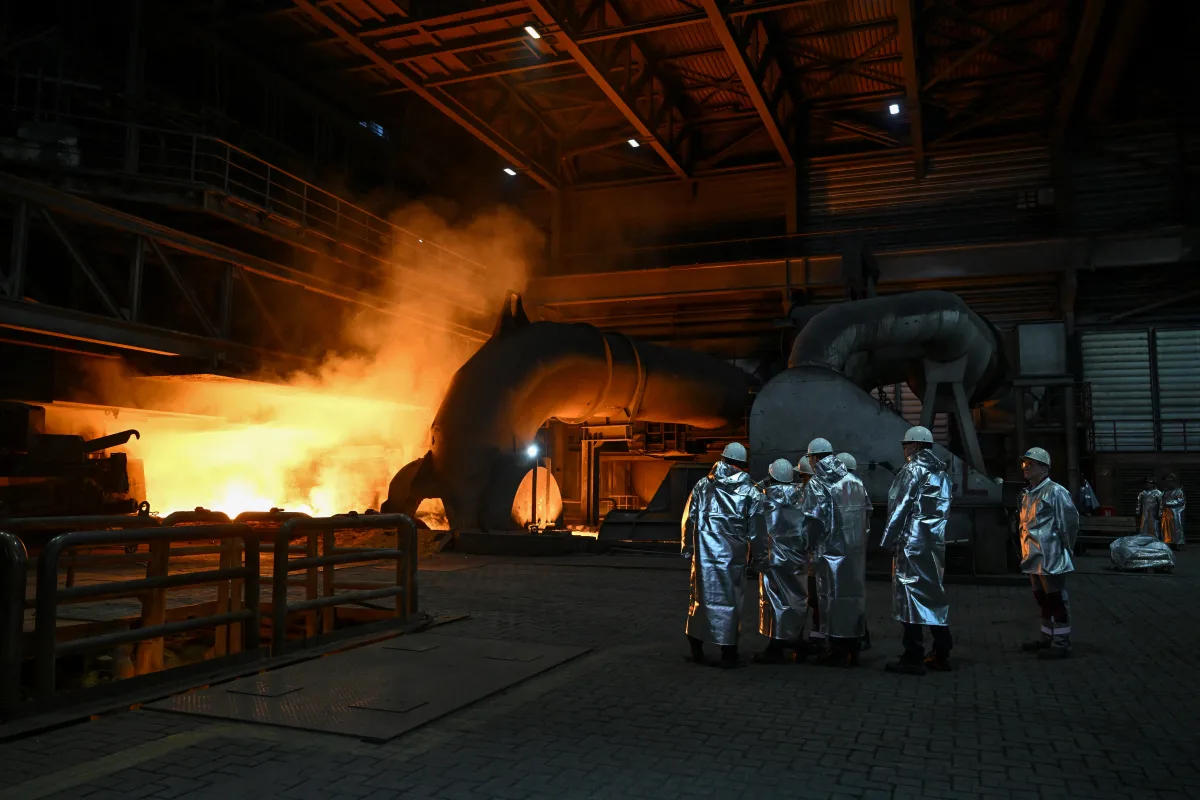

For generations, the steel mills of the Ruhr, Silesia, and Lorraine have represented the beating heart of Europe's heavy industry. Those chimneys, now largely transformed or decommissioned, have been symbols of the continent's economic and industrial power for decades. But today, in a world shaken by geopolitical crises, energy transition, and new technological challenges, the European Union is once again decisively looking at the metals sector, relaunching it with a strategic vision: to produce steel sustainably, reducing emissions while simultaneously strengthening its strategic autonomy.
The European Steel and Metals Action Plan: Brussels' New Plan
On March 19, 2025, the European Commission presented the European Steel and Metals Action Plan, the most ambitious plan ever launched to support the continent's metallurgical industry. A key sector that is currently under pressure due to internal and external factors: Chinese overproduction, American tariffs, exorbitant energy costs, and the urgent need to meet climate goals.
The plan's objective is twofold: on one hand, to strengthen internal production capacity to protect the European market from unfair practices and excessive dependencies; on the other, to support the sector's ecological transition, transforming it into one of the engines of climate neutrality by 2050.
Steel Becomes Strategic Again for European Defense
One of the most significant novelties of the plan is the explicit recognition of the strategic role of steel for security and defense. In a Europe increasingly aware of its military vulnerability and the need to strengthen autonomy in the defense sector, domestic metal production is now considered a pillar of the continent's operational readiness.
According to Brussels, in the next five years, the Union will need to invest up to 1 trillion euros in military spending. It is precisely within this framework that the relaunch of the steel industry fits, seen not just as a productive sector, but as a strategic asset capable of providing essential materials for armaments, armored vehicles, ships, aircraft, and military infrastructure.
Production, Numbers, and Challenges
Currently, the EU is able to meet about 90% of its steel needs, but the situation becomes complicated when considering other strategic metals: only 46% of aluminum and 25% of nickel needed are produced internally. And the numbers become even more relevant when analyzing the use of these materials: a modern tank can require up to 60 tons of steel, a self-propelled artillery system reaches 100 tons, while a fighter jet needs at least 3 tons of aluminum.
The problem is that the competitiveness of the European industry is threatened by extremely high energy costs: European producers pay up to five times the gas price compared to their U.S. competitors, and four times the cost of electricity. To worsen the situation, a third of the steel used in Europe today comes from Asian imports, which have tripled in the last ten years.
A Green Revolution: Low-Emission Steel
The Commission's plan is based on six main pillars:
- Reduction of energy costs;
- Prevention of relocations related to emissions;
- Protection of European production capacity;
- Promotion of metal recycling;
- Protection of employment;
- Public and private support for investments.
Among the most concrete measures is the creation of a European Bank for Industrial Decarbonization, with a planned endowment of 100 billion euros, and a first public auction of 1 billion in 2025 to encourage the use of low-emission technologies such as electric furnaces and the use of green hydrogen.
The transition to a “green” steel industry is technically possible: by replacing coal with hydrogen in production processes, CO₂ emissions can be reduced by up to 95%, with water vapor as the only byproduct. However, this transformation requires enormous amounts of electricity, and if costs remain so high, the global competitiveness of Europe risks taking a hard hit.
Energy and Security: Two Sides of the Same Coin
The gas crisis of 2022 left a deep mark: dependence on energy imports is now seen as a strategic vulnerability. For this reason, the European Union aims to diversify sources: renewables, nuclear (where accepted), and investments in electrical grids. Countries like Poland, for example, have already started projects to build new nuclear power plants, with the goal of providing stable and clean energy also to the metallurgical industry.
This new energy can power the steel plants of the future or be used to produce green hydrogen, key to decarbonizing the entire sector.
Conclusion: Metal as a Symbol of the New Europe
In a world where defense has returned to the center of the agenda and sustainability is a global necessity, steel reaffirms itself as a strategic asset for the European Union. The relaunch of the metals industry is not just an economic or climatic issue: it is a political choice, aimed at ensuring industrial resilience, strategic autonomy, and collective security.


Comments
No comments yet. Be the first!