


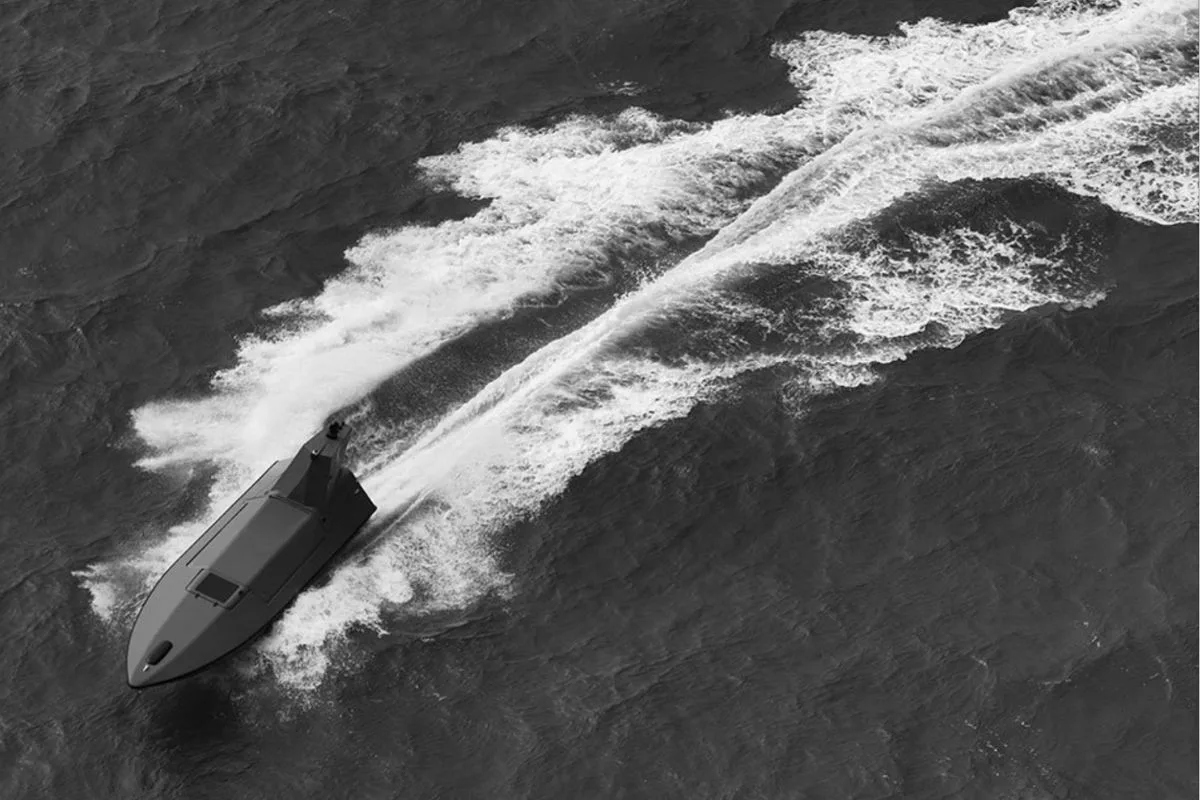

LONDON — The Royal Navy has announced the purchase of 20 K3 Scout Medium unmanned surface units, produced by the British Kraken Technology Group. The new vehicles will be assigned to the Coastal Forces Squadron and the 47 Commando Royal Marines and will be used for operations, training, and technological development activities.
The initiative is part of the broader Project Beehive, a program with which the British Navy intends to create a platform capable of functioning as a testing ground for future hybrid naval technologies. According to the Royal Navy, the project should offer not only a testing base but also an immediate operational capability, helping to strengthen the security and effectiveness of the deployed units at sea.

The Operational Node: Possible Deployment in Crisis Areas
The announcement comes at a time of high international maritime tension, also marked by the closure of the Strait of Hormuz by Iran. For this reason, the question remains whether the new USVs could soon be deployed in sensitive theaters, for example, for surveillance missions or mine clearance support.
On this point, however, the British Ministry of Defense maintains the utmost secrecy. A spokesperson explained that, for operational security reasons, the specific payloads that can be installed on the platforms will not be disclosed. However, he emphasized that the K3 offers high flexibility, with the possibility of rapid integration of different systems and the ability to operate both autonomously and alongside manned units. The vehicles can also be launched and managed from the mission bays of Type 31 and Type 26 frigates.

Features of the K3 and Vision of the “Hybrid Navy”
From a technical point of view, the K3 Scout Medium is 8.4 meters long, has a maximum displacement of 2,500 kilograms, can reach 55 knots, and has a range of about 650 nautical miles. It can carry up to 600 kilograms of payload and be adapted to different missions: logistics, search and rescue, surveillance, reconnaissance, detection, and even strike operations.
The Royal Navy has announced that personnel is already in training and that advanced operational capability will be available in the coming months. The purchase confirms the growing centrality of unmanned systems in the transformation of the British fleet. A line already anticipated by First Sea Lord Sir Gwyn Jenkins, who in recent months described the future of the Royal Navy as that of a “new hybrid navy”, composed of manned, unmanned, and autonomous platforms, all digitally connected to redefine British maritime power.



Comments
No comments yet. Be the first!